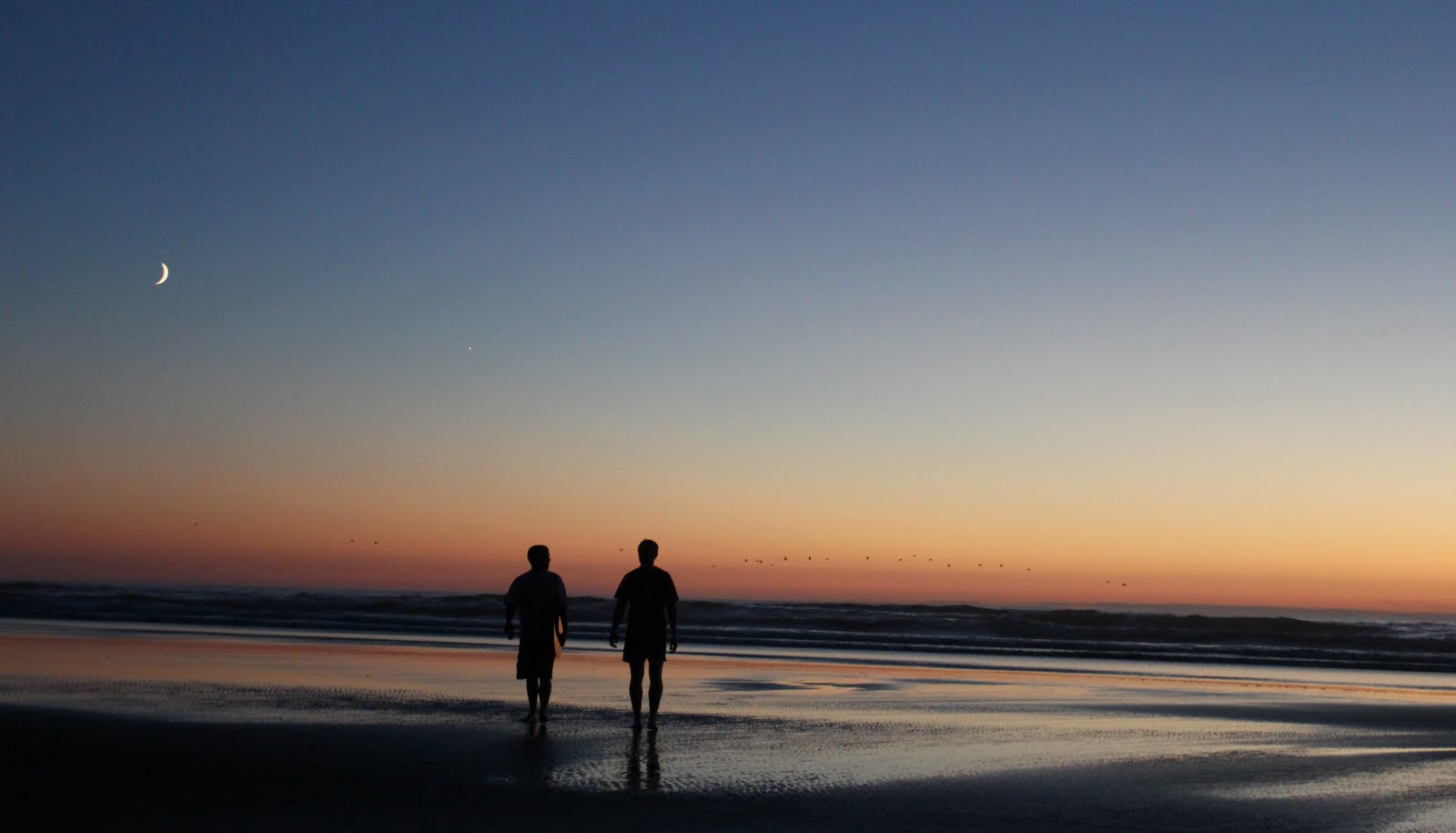
Took a day trip to Mount St. Helens recently, came back with a few shots. Man, it is stunning up there. The force of nature still clear 30 years later. Can't wait for the sequel: Mount Rainier.
The mountain was covered in a haze the entire time.
Steve's son, David, takes a moment after the funeral service to take in his father's grave.
I wrote this for the AP's Facebook page, but unsure if they're going to use it, so here it is:
During a busy afternoon editing, I got the unexpected call. On the other line was Teri Sall, the wife of an Oregon man with ALS I had met three months earlier. Her husband, Steve Sall, had chosen to be buried in a forest, in a so-called "green burial."
When I answered the phone, I asked her how she was. Not good, she said, Steve had died the night before.
Reporters often deal with the aftermath of death. From a brief on a fatal car accident to more shocking events where people lose their lives. Journalist in zones of danger and war see death even closer.
I've covered vigils, funerals, and memorials _ it never gets easy to talk to people who have lost a loved one.
Teri's call was different. The fact alone she called me was different. I had met Teri and Steve in June of this year. Along with their son, David, they had allowed me to follow them with a video camera while Steve picked a burial spot in a private nature reserve in southcentral Washington.
"Green" burials are a small but growing section of funeral services in the United States. People who chose green burials are hoping to be buried in an environmentally friendly manner. That means no concrete vault, steel or extravagant wood coffins and no chemicals to preserve the body.
Steve had been a hiker all his life, a lover of the outdoors. His eyes often lit up while touring the burial grounds.
By the time I met him, ALS had fully claimed the use of his speech and most of his muscles. He communicated using a pencil and a laminated piece of paper with a grid filled with letters and conjunctions. Teri would look at where he pointed and read his thoughts.
Through the process, Steve kept a sense of humor. Asked why he wanted a green burial, he said he wanted to "branch out."
Three months later I met Teri again, this time to bury her husband. All I hoped at the moment was to not get in the way of the family and tried to be as transparent as possible.
For me, seeing a family go through painful, but necessary grieving process, and to see a wife and son lose their beloved father, was something I hadn't experienced before in my career.
They had allowed me and the public into what is a very private ritual, and for that, I am especially grateful.
Rest in peace, Steve _ may your atoms become trees.
Here's a peek at an interview with UW quarterback Jake Locker for an upcoming video.
Check out the video:
Here's an unfinished cut of the video. This is the one that was edited by my producers. They basically just cut the last third, where Jake talks about hanging out at the stadium by himself.
Last month the AP chronicled the painful ritual of mourning soldiers who lost their lives in Afghanistan. A group of writers interviewed families across the country and a video was produced to accompany the feature. Below is the video. I attended the vigil of Jarod Newlove, the sailor from West Seattle, who at 25 (my age) was killed in a remote area of Afghanistan, leaving behind a wife and two young children.
Newlove's death became the focus point of international attention. For a couple of days, it was thought he had been captured by the Taliban. I hope his family found our coverage to be thoughtful and respectful. It is always hard as a journalist to drop down on a family who is grieving and in pain.
Read the national story here. Read my story on the vigil here -- AP photographer Elaine Thompson took several poignant shots as well.
This past month, the last Army brigade appointed to "combat" operations in Iraq came home, part of the Obama administration's effort to reduce the number of troops there, while shifting some of them to Afghanistan.
This assignment started as a video request. Originally I was just slated to do just video. I left Seattle at 6 a.m. and got to Joint Base Lewis-McChord at about 7 a.m. The families were all there, waiting for husbands, wives, sons and daughters. Minutes after I got there, I get a call from a photo editor, asking if there were any photographers there. There weren't. So, for a welcoming ceremony that lasted maybe 7 minutes, I had to shoot photos and video. I'm pretty sure the video suffered from it, watch it below. I also encountered technical problems. Later in the day, I wrote a story. It was a long day.
But the arrival of troops is always a sweet moment and we get to witness raw human emotions, genuine smiles and happiness, if only for a few moments.